
Wellness · August 3, 2026
The Difference Between a Vegan and a Vegetarian
One word gets used for both, but they are not the same thing. As a holistic nutritionist, here's how I explain the difference.
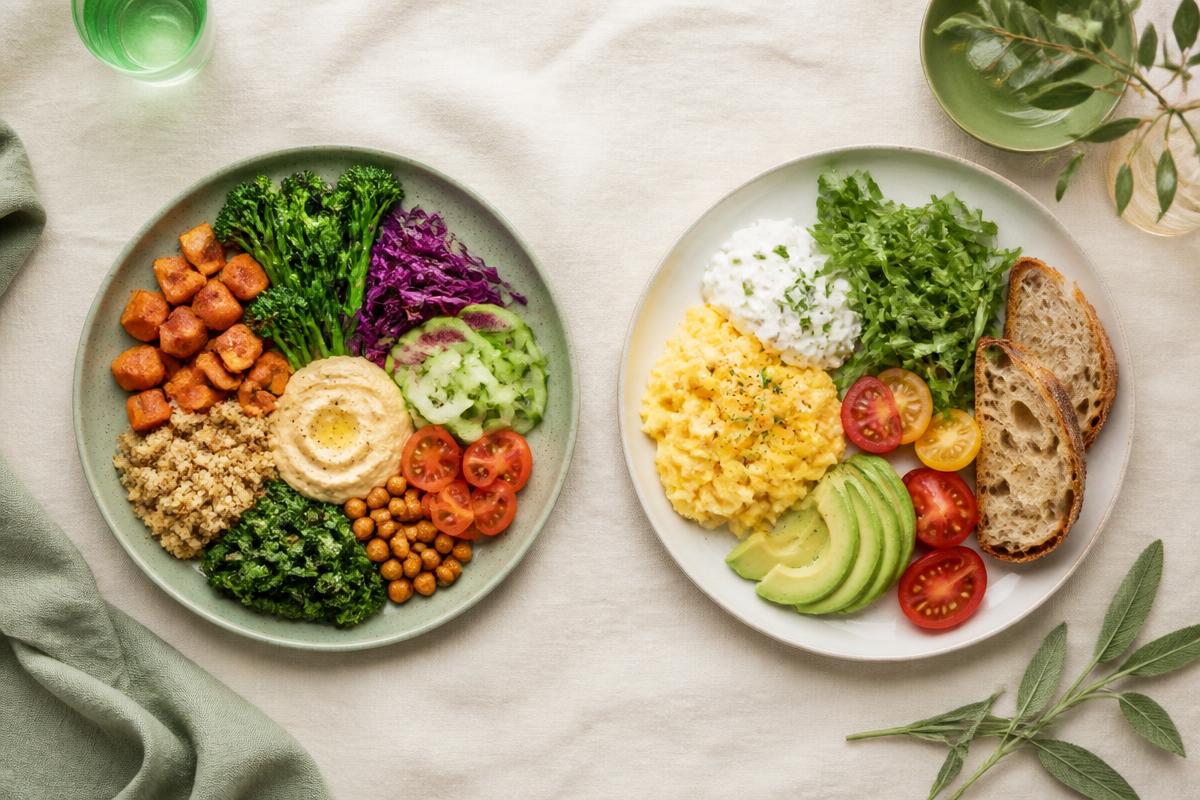
People ask me all the time: 'Are you vegan or vegetarian?' And my answer usually surprises them — I care less about the label and more about what you're actually putting on your plate. But the words do matter, especially when you're ordering at a restaurant, cooking for guests, or trying to understand your own body.
Vegetarian: no meat
A vegetarian does not eat meat, poultry, or fish. That part is simple. But vegetarians often still consume eggs, dairy, and honey. There are subcategories — lacto-ovo vegetarians eat dairy and eggs, lacto vegetarians eat dairy but not eggs, ovo vegetarians eat eggs but not dairy — but in daily conversation, 'vegetarian' usually means plant-based plus eggs and dairy.
Vegan: no animal products at all
Veganism goes further. A vegan avoids all animal products: no meat, no dairy, no eggs, no honey, and often no gelatin, whey, casein, or certain food colorings. For many vegans, it is also a lifestyle choice that extends to clothing, skincare, and entertainment.
- Vegetarian: plants + eggs and/or dairy
- Vegan: plants only, nothing derived from animals
- Both can be healthy; both can be poorly planned
Which one is healthier?
Neither label guarantees health. A vegan who lives on french fries and soda is not healthier than a vegetarian who eats whole grains, legumes, and vegetables. My B.S. in Holistic Nutrition taught me this: the quality of the food matters more than the name of the diet. Color on the plate, fiber, hydration, and mindful eating will outperform any trend.
Don't let a label become a prison. Let it become a starting point.